
Practical Pathways to Balance Body, Mind & Nerves

By

Suzanne “Queen Bee” Tabert 🐝

 | 

No Responses

A Quest for Calm and Emotional Well-Being, Part 1

Our journey toward calm begins by understanding the very system that governs how we respond to life’s challenges. Stress isn’t just a mental state—it’s a full-body event directed by the nervous system. Before we can truly restore balance through herbs and lifestyle shifts, we must first see how this intricate network shapes every thought, feeling, and physical reaction.

The Nervous System: The Body’s Command Center

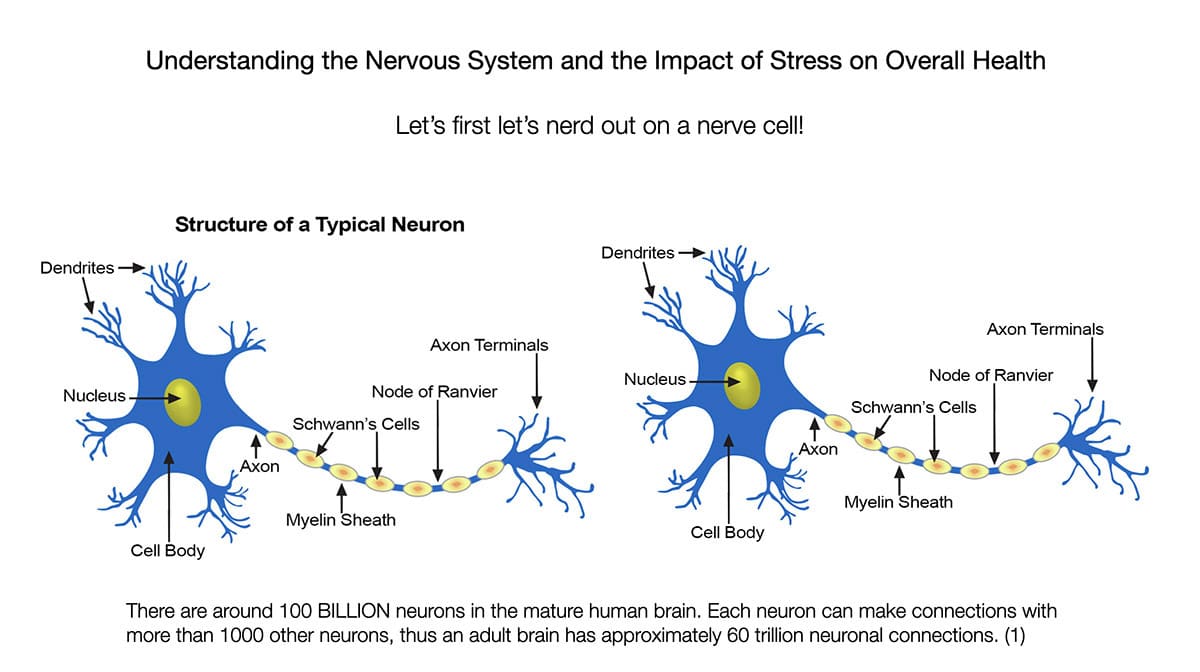
The human brain contains roughly 100 billion neurons, each forming thousands of connections that create an astonishing 60 trillion neural pathways. These neurons communicate through electrochemical signals, forming the architecture of our sensations, movements, and moods.

Protecting them is the myelin sheath, a fatty layer produced by Schwann cells that insulates nerve fibers and allows signals to travel efficiently. When this protective sheath is compromised—through nutrient deficiency, toxins, or chronic stress—nerve communication falters. We quite literally feel “frazzled,” and our mood follows suit. Supporting nerve integrity through nutrition and specific herbs becomes a cornerstone for emotional stability and calm.

How the Brain Interprets the World

Every second, sensory input streams into the brain through taste, touch, smell, sight, and hearing. The limbic system and HPA axis (hypothalamic-pituitary-adrenal) interpret these signals and decide whether to relax or rally for defense.

When the brain recognizes safety, it promotes digestion, rest, and repair. When it perceives a threat—whether real or imagined—it activates the stress response, preparing us for “fight, flight, or freeze.” This survival mechanism keeps us safe, but in modern life, it’s triggered far too often: traffic, deadlines, financial stress, global news, even social media all register as potential danger.

Navigating Social Media: Stephanie’s Challenge

Stephanie habitually scrolls social media, facing immense pressure to curate her life on a platform where others often appear flawless or engaged in trauma bonding.

The relentless demands of constant posting are unsustainable, as school and work prevent her from documenting every moment for external validation.

This daily engagement fuels her feelings of inadequacy, breeding fear of failure, self-shaming, resentment, hurt, and pervasive anxiety. Stephanie describes herself as “exhausted, defeated, and drained” by social media.

Spoiler alert! Not everything people post is the truth, or it is very heavily edited to make the posts look prettier and people look more accomplished and happier than they truly are. (Can someone say Al?)

~

Remember, the vitriol perpetrated on social media is like a cancer. Stay far from it. Do not participate, and do not add to it. Protect your peace by disengaging from negativity.

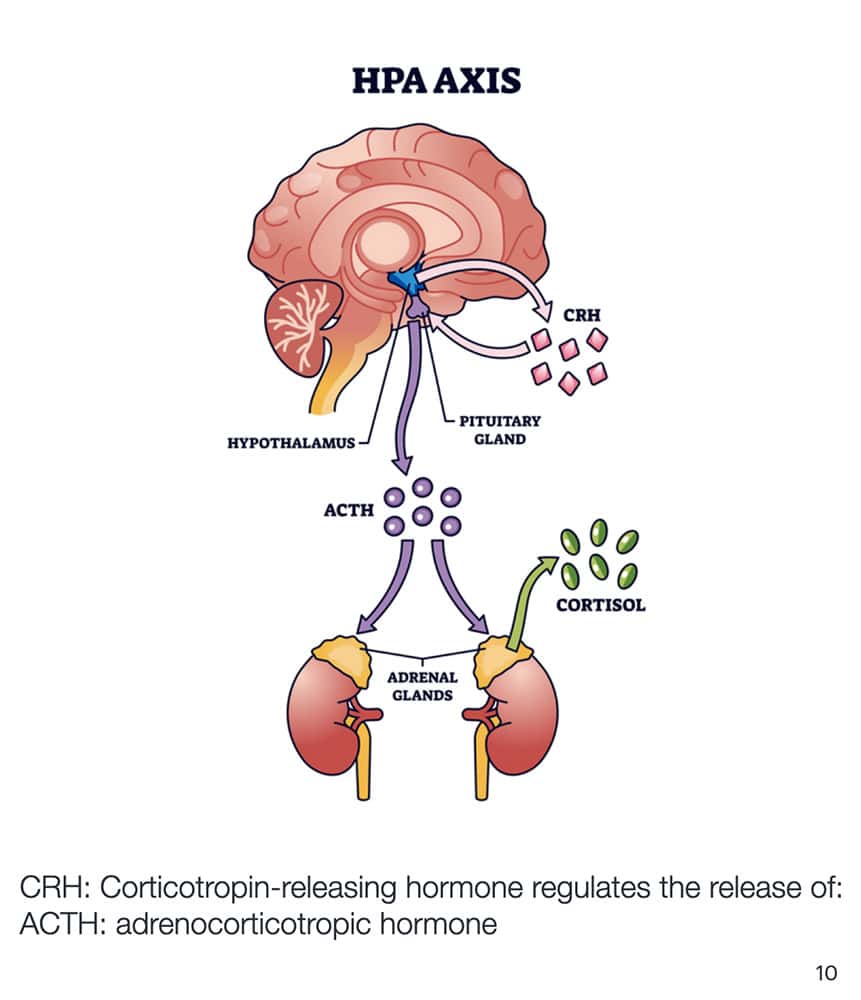
HPA axis diagramInside the Stress Response: The HPA Axis

When we encounter stress, a cascade begins:

  • The hypothalamus releases corticotropin-releasing hormone (CRH).
  • The pituitary gland responds by secreting adrenocorticotropic hormone (ACTH).
  • The adrenal glands, perched atop the kidneys, then release adrenaline and cortisol.

These hormones mobilize energy—raising blood sugar, increasing heart rate, and sending oxygen to muscles. When the perceived threat passes, cortisol levels drop and the system returns to homeostasis. But when stress is constant, cortisol remains elevated, keeping the body in high alert and depleting vital reserves.

Chronic Stress: The System That Won’t Switch Off

In a chronically heightened state of anxiety, the brain begins to misfire. Everyday challenges—like answering an email or facing an awkward conversation—can feel like emergencies. The ability to discern between real and perceived threats blurs, rewiring the nervous system into a perpetual “fight or flight” mode.

This ongoing activation suppresses immune function, fuels inflammation, and can even alter the brain’s structure. Over time, the body interprets nearly everything as dangerous, leading to exhaustion, irritability, and illness.

Real vs. Perceived Threats

Learning to recognize the difference between actual danger and emotional or imagined stress is key to restoring calm.

  • Actual threats—like a car swerving into your lane—require immediate physical response.
  • Perceived threats—like fear of judgment or worry about a future event—trigger the same stress chemistry, but without any real danger.

Cultivating awareness of this difference empowers us to pause, breathe, and respond appropriately rather than react reflexively. With practice, this discernment rewires the brain toward resilience and peace.

When Stress Becomes Physical

The symptoms of chronic stress can manifest from head to toe:

  • Physical sensations may include racing heart, trembling, dizziness, sweating, and shallow breathing.
  • Digestive disturbances—acid reflux, nausea, diarrhea, or leaky gut—arise when blood flow is diverted from the stomach to the limbs.
  • Hormonal and immune dysregulation lead to fatigue, skin flare-ups, autoimmune reactions, or suppressed immunity.
  • Neurological and degenerative effects such as neuropathy or accelerated aging reveal how deeply prolonged stress reaches into every system

Even the musculoskeletal system is affected—tight muscles, misaligned vertebrae, joint inflammation—all reflect the body’s ongoing preparation for imagined battle. These tangible consequences remind us that stress management isn’t a luxury; it’s essential preventive medicine.

Stress, Digestion, and Immunity

When the body stays in emergency mode, digestion slows, and the immune system goes offline. Nutrient absorption declines, the microbiome becomes imbalanced, and the body struggles to heal. This creates a vicious cycle: poor digestion fuels inflammation, which further agitates the nervous system.

Understanding this interplay underscores why herbal and lifestyle interventions must support both the nervous and digestive systems to achieve true restoration.

Adrenal Exhaustion and Endocrine Imbalance

The adrenal glands are the workhorses of our stress response. When they’re overused, they eventually falter—commonly referred to as adrenal exhaustion. Other glands, like the thyroid and reproductive organs, attempt to compensate, disrupting hormone balance and leading to fatigue, mood swings, and systemic dysfunction. Supporting the adrenals through rest, nourishment, and adaptogenic herbs (which we will explore in part 2) is central to long-term recovery.

Chronic Inflammation: The Ripple Effect

Modern research confirms what herbalists have observed for generations: chronic stress drives chronic inflammation, the underlying contributor to nearly every modern disease. From cardiovascular issues to autoimmune conditions, persistent inflammation wears down tissues, accelerates aging, and blocks healing.

The good news? By calming the nervous system and restoring adrenal balance, we reduce inflammation at its root, paving the way for true healing.

Building Emotional Resilience

The first step toward peace is understanding how deeply stress touches every system. The next is practicing self-awareness and compassion. When we learn to interpret the body’s signals—tight shoulders, shallow breath, irritability—as invitations to pause rather than push harder, we begin to reclaim our equilibrium.

Through mindfulness, breathwork, movement, and the steady companionship of herbs, we can retrain our stress response and move from survival to thriving.

Looking Ahead

This foundational understanding sets the stage for the next steps in healing. In part 2, we’ll dive into Herbal Allies for Emotional Resilience—the plants that nourish nerves, calm anxiety, and restore vitality.

Stress may be inevitable, but chronic imbalance is not. With awareness, knowledge, and plant-based support, we can re-educate the nervous system, strengthen our resilience, and return to our natural state of calm and vitality.

Stay tuned — Part 2 will be released next month! While you wait, dive into our growing collection of herbal articles, on-demand webinarseBooks, and our Materia Medica Monthly online course series.

Suzanne "Queen Bee" Tabert 🐝

Suzanne Tabert, bioregional herbalist, speaker, and author, is director of herbal education and herbal mentor at the Cedar Mountain Herb School. An herbal medicine instructor for 35+ years, Suzanne teaches with great passion and excitement, bringing her wealth of herbal knowledge to students in an engaging and vibrant manner. She is the primary instructor at CMHS and an adjunct faculty at Bastyr University. Taking students to wild places and giving them tools to engage and connect with flora, fauna, and the exquisite beauty of nature is the icing on the cake of life, and one way that Suzanne is making a difference in the world, one person, one group at a time. Cedar Mountain Herb School is a member of the American Herbalists Guild, Partnership in Education with United Plant Savers, and the American Herb Association.

Leave a Reply

Your email address will not be published. Required fields are marked *

You may also like

Shata Dhauta Ghrita (100x Washed Ghee)

Move over tallow, there's a new (skincare) oil in town! Actually, it's not new at all...

Meet one of Ayurveda’s oldest ...

Smoke Is in the Air!

As the hot days of summer continue, fires are burning across many parts of the country. Here in North Idaho, ...

Making Homemade Ghee

Those who are dairy free like me (😢😭) may be able to tolerate ghee as it is pure fat with ...

Showing Slide 1 of 4

Tincture Dilution Calculator

Calculate the volumes of any two alcohol proofs to create a tincture of a particular strength.

Copyright © 2026 Redheaded Herbalist

Update your Avatar

Stay in the loop!

Join the Cedar Mountain Herb School newsletter