Many people exercise regularly, watch what they eat, and still struggle with stubborn weight around the midsection. For many, the issue isn’t motivation or willpower, and it isn’t a lack of fitness. The root cause is more often metabolic: insulin resistance. When cells stop responding properly to insulin, the body becomes increasingly locked into a state of storage rather than burning fuel for energy. Understanding why this happens, how it progresses, and how to turn it around offers a powerful path toward metabolic stability and lasting health.
What Insulin Is Actually Supposed To Do
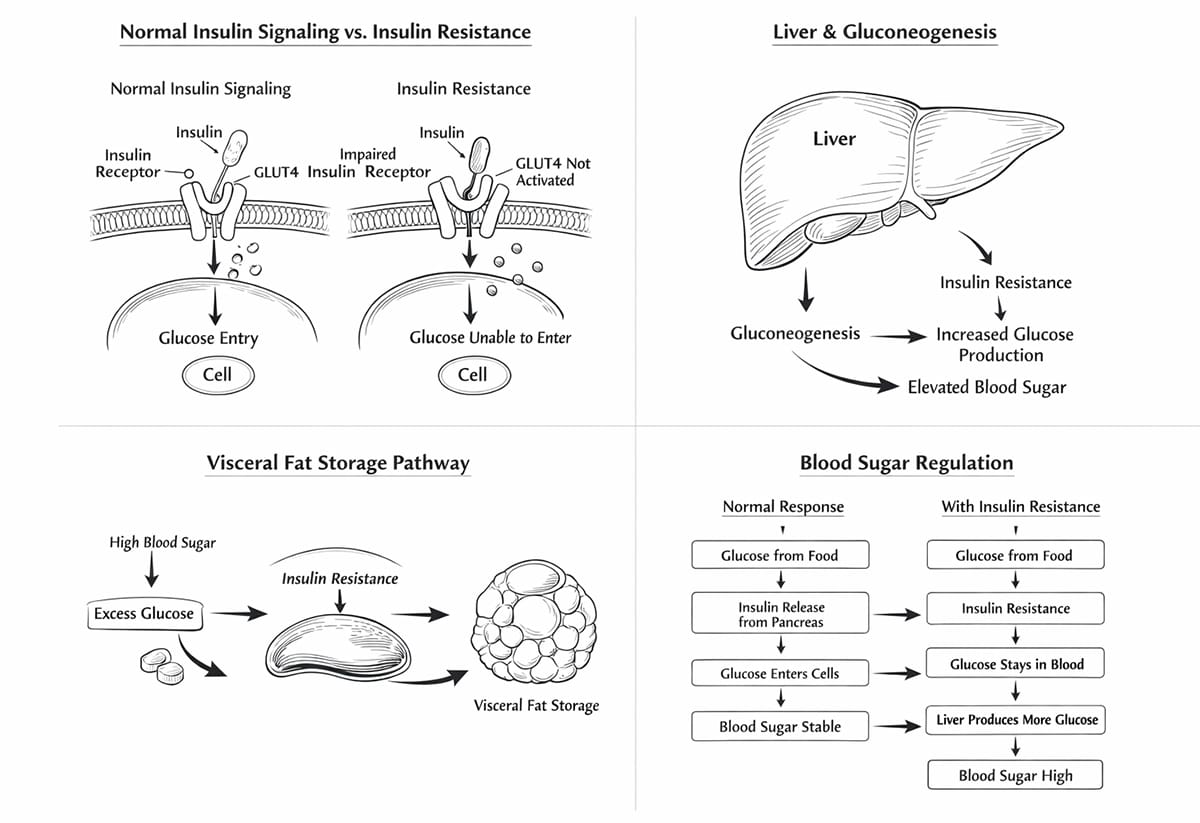
Insulin is a hormone produced by the pancreas. Its primary job is to act as a messenger—when blood sugar rises after a meal, insulin signals cells throughout the body to open their doors, take in glucose, and use it to generate energy. This system works smoothly when cells are receptive and insulin is recognized.
In insulin resistance, however, that communication begins to break down.
The Cycle of Resistance
Insulin resistance develops in stages, and the body employs several backup strategies that ultimately make the situation worse. Understanding this cycle makes it easier to intervene.
1. The Blocked Signal
In a healthy state, insulin binds with receptors on the surface of muscle and fat cells. In insulin resistance, those cells begin to ignore the messenger. Glucose cannot get into the cells efficiently, leaving sugar circulating in the bloodstream.
There’s an irony here: blood sugar becomes elevated, yet cells are essentially starving for energy because they cannot access the glucose right in front of them.
2. The Liver Response
The liver observes that cells are under-fueled. In an attempt to help, it begins making even more glucose through a process called gluconeogenesis. This is normally a survival mechanism during fasting. Under chronic insulin resistance, however, it becomes counterproductive. The bloodstream now carries both the glucose from food and the extra glucose manufactured by the liver.
3. The Storage Loop
The body cannot leave high blood sugar circulating indefinitely. Excess glucose gets shuttled into fat storage, particularly around the midsection. Fat that accumulates in this region tends to be visceral fat, which surrounds organs and fuels a low-grade inflammatory state. This inflammation further drives insulin resistance, creating a feedback loop that becomes harder to break over time.
Chronic stress, poor sleep, sedentary living, and highly refined foods all accelerate this process. Over the months and years, the pancreas works harder to produce more insulin to force cells to respond. Eventually, blood insulin levels become chronically elevated—a state called hyperinsulinemia—which promotes even more fat storage and inflammatory signaling.
The “Metabolic Net”: How Food Order Impacts Blood Sugar
While eliminating highly processed food is a cornerstone of reversing insulin resistance, the order in which you eat whole foods also plays a major role in how your blood sugar responds to a meal.
Vegetables and Protein First
Starting a meal with fiber-rich vegetables (raw or cooked) followed by a source of protein changes the metabolic outcome of everything that comes afterward. Fiber slows gastric emptying and decreases the speed at which carbohydrates are digested. Protein stimulates satiety hormones and stabilizes glucose absorption.
When vegetables and protein are eaten first, they create what can be thought of as a metabolic net. This net alters the carbohydrate load that hits the bloodstream, slowing down digestion and preventing the sharp glucose spikes that worsen insulin resistance and systemic inflammation.
Small clinical studies have demonstrated that simply altering the sequence of eating—vegetables first, protein second, carbohydrates last—can significantly lower post-meal glucose levels and reduce insulin demand.
This is a simple shift, but for many people, it is a game-changer.
Movement as a Glucose Sink
Physical activity can dramatically improve insulin efficiency, and it doesn’t require extreme workouts or specialized gym routines. One of the most effective ways to lower blood sugar is to move shortly after eating, particularly after carbohydrate-rich meals.
Engage the Big Engines
Skeletal muscle is one of the largest glucose sinks in the body. Muscles can take in glucose without requiring large amounts of insulin, especially when they are active. Movements that activate the large muscle groups—legs, glutes, and arms—are ideal because they create a strong pull on available blood glucose.
Walking, biking, rowing, pickleball, hiking, dancing, gardening, and resistance training are all effective. What matters more than intensity is timing.
The 10–30 Minute Window Matters
The best time to move is within 10 to 30 minutes after eating. Even a 10-minute brisk walk has been shown to lower post-meal glucose levels. For people dealing with daytime fatigue, blood sugar swings, or midsection weight gain, this is a powerful and accessible tool.
The Vacuum Effect
By using muscle tissue as a glucose sink, post-meal movement creates a vacuum effect. The muscles draw sugar out of the blood and into their cells to generate energy, preventing that glucose from being stored later as fat. This not only improves metabolic flexibility, but also reduces the insulin burden on the pancreas over time.
The Metabolic Key: Berberine-Rich Plants
Nature supplies several plants rich in berberine, a vivid yellow alkaloid known for its role in supporting healthy metabolic function. Research in the last two decades has revealed that berberine works at the cellular level to help the body regain sensitivity to insulin.
Activating AMPK
Berberine activates an enzyme called AMP-activated protein kinase (AMPK), often described as a metabolic master switch. AMPK influences how cells use and store energy, helping:
- increase insulin receptors
- enhance glucose uptake by cells
- reduce production of glucose in the liver
- improve lipid metabolism
This improves insulin sensitivity and helps break the cycle of resistance.
Reducing Inflammation and Liver Burden

Berberine also reduces inflammatory signaling and slows down glucose production in the liver. In insulin resistance, the liver often overproduces glucose, pushing blood sugar higher. Berberine helps modulate this process.
Herbs rich in berberine include:
- Oregon grape (Mahonia aquifolium)
- Goldenthread (Coptis chinensis)
- Barberry (Berberis vulgaris)
Oregon grape in particular supports bile flow, helping the liver manage dietary fats and clear metabolic byproducts more effectively. This is important because liver congestion and sluggish bile flow commonly accompany insulin resistance, especially in individuals with fatty liver or elevated triglycerides.
Pancreatic and Stress Support: Tulsi (Holy Basil)

Modern metabolic dysfunction doesn’t exist in a vacuum. Stress is one of the major, and often overlooked, drivers of insulin resistance. Elevated cortisol increases blood sugar, encourages fat storage around the midsection, and interferes with insulin signaling.
Tulsi (Ocimum sanctum), also known as Holy Basil, is an adaptogen that supports the body’s stress response while offering direct metabolic benefit.
Clinical research has shown that Tulsi:
- improves insulin sensitivity
- supports healthy pancreatic function
- lowers fasting glucose and HbA1c
- reduces LDL cholesterol
- protects against oxidative damage linked to insulin resistance

These actions make Tulsi valuable for individuals whose metabolic challenges are tied to chronic stress, poor sleep, or elevated cortisol.
Supportive Nutrients to Consider
Chromium is a trace mineral involved in glucose metabolism and insulin signaling. Chromium picolinate, often used in research, improves insulin receptor sensitivity. Taking it with berberine within an hour of exercise may enhance metabolic benefits by improving the way cells respond to insulin.
When the Problem Isn’t Willpower
For many people, the most important message is this: if you are exercising and eating well, but your midsection isn’t changing, it may not be about effort. Insulin resistance puts the body into storage mode. Until the signal is corrected, the body will continue storing fuel instead of burning it.
The Good News
Insulin resistance is not a life sentence. By addressing the issue from several angles, many people successfully reverse the pattern.
To Sum Up
Insulin resistance is widespread, and its early signs often go unnoticed: stubborn midsection fat, post-meal fatigue, cravings, elevated blood pressure, elevated triglycerides, or difficulty feeling full. By understanding why it occurs and how to intervene, people can restore metabolic flexibility, stabilize energy, and begin burning fuel again rather than storing it.
Nutrition, movement, stress support, and herbal medicine form a powerful combination. With strategy rather than struggle, metabolism can shift away from storage mode and back toward a state of balance, activity, and health.